
Empower Your Home, Enrich Your Future
Sign-in or signup
Financial Justification
The following table shows the ROI of these investments compare favorably to investing in the stock market.
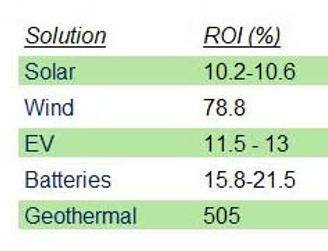
It's a fact that the incremental cost of producing renewable energy is near zero
Please Note:
Detailed ROI Discussions are included in the section dedicated to each Renewable Energy Solution.
Key Consideration

Utility provided Energy forecasts indicate almost double the current needs and utility energy delivery costs by 2050.
ROI Components Discussion

For individuals who prioritize return on investment (ROI) and are less concerned about climate change, there are still several compelling motivations for using renewable energy:
1. Cost savings: In many areas, renewable energy sources like solar and wind have become cheaper than traditional fossil fuels. Over time, this can lead to significant savings on energy bills.
2. Energy independence: Renewable energy systems, particularly solar panels with battery storage, can provide greater energy independence and resilience against power outages or price fluctuations in the energy market.
3. Government incentives: Many governments offer tax credits, rebates, or other financial incentives for installing renewable energy systems, which can greatly improve ROI.
4. Property value increase: Homes with renewable energy systems, especially solar panels, often have higher resale values.
5. Long-term price stability: Unlike fossil fuels, renewable energy costs are not subject to market volatility, providing more predictable energy expenses over time.
6. Technological investment: As renewable technologies continue to advance, early adopters may benefit from being ahead of the curve in terms of energy efficiency and technological integration.
7. Reduced maintenance costs: Some renewable energy systems, like solar panels, have fewer moving parts and require less maintenance than traditional energy systems.
8. Potential for energy sales: In some areas, excess energy generated by renewable systems can be sold back to the grid, creating an additional revenue stream.
9. Corporate image and marketing: For businesses, using renewable energy can enhance brand image and appeal to environmentally conscious consumers, potentially increasing market share.
10. Hedge against future regulations: As governments worldwide trend towards stricter environmental regulations, investing in renewables now could preempt future mandatory upgrades or carbon taxes.
These factors can provide a strong business case for renewable energy adoption, even for those primarily focused on financial returns rather than environmental concerns.